Tag Archives: connection

Empty Nest Syndrome: What Nobody Tells You

Summary:

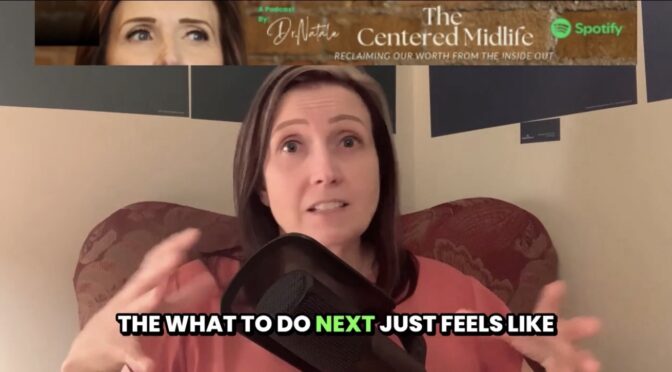
This episode explores the emotional shock many midlife women feel when they drop a child off at college and come home to a quieter house. Dr. Natalie reframes empty nesting as more than just missing a child – it can be a loss of role, identity, and a long-standing way of getting needs met. She also connects this transition to grief, self-worth, caregiving patterns, and the need to build a new relationship with yourself as kids become independent.


Keywords and Phrases

  • empty nesting
  • grief
  • identity loss
  • motherhood
  • caregiving
  • self-worth
  • pattern interrupt
  • self-abandonment
  • midlife transition
  • perimenopause
  • inner critic
  • rebuilding yourself
  • self-reflection

Quotes:

  • “The reward for being a good parent is that they’re gonna eventually not be in our lives every day.”
  • “The person you’re gonna pick up and caretake for the rest of your life, that’s you.”
  • “Self-abandonment is not a great way to manage grief and loss.”
  • “What hurts is not just the child leaving, but the loss of being needed.”
  • The inner critic often shows up when you’re trying something new.”
  • “The work now is building a relationship with yourself.”


Key topics:

  • Empty nesting can feel intolerable because it is not only separation, it is a major identity disruption.
  • Dr. Natalie says many women are grieving the loss of the mom role, not just the child leaving home.
  • If self-worth has been tied to being a “good mom,” empty nesting can trigger a crisis of identity.
  • Some women have also used parenting as the main way they have ever felt loved, which makes the transition even harder.
  • Parenting may have functioned as a coping strategy to numb old wounds, especially for women who grew up in emotionally barren families.
  • Her central message is that the path forward is building a relationship with yourself through reflection, counseling, new friendships, and honest self-inquiry.

Timestamps

(00:00) Why empty nesting hits so hard in midlife

(01:22) The grief of letting kids go

(03:46) When over-contacting children can damage the relationship

(04:16) Grieving the role, not just the child

(05:44) When worthiness gets tied to caregiving

(08:06) Parenting as a source of being loved

(09:03) Grief as a recurring process, not a single emotion

(10:03) Building a relationship with yourself

(11:28) Parenting as a way to avoid other unresolved issues

(12:18) Why counseling or coaching can help in this transition

(13:39) How Gen X women were trained to hide needs

(14:38) Midlife, menopause, and lower distress tolerance

(16:31) Why caretaker dynamics strain adult relationships

(18:27) Relearning relationships and needs outside the family role

(20:48) Empty nesting as a pattern interrupt

(21:47) Moving through transition with less resilience

(23:15) Journaling, reflection, and making space for self-knowledge

(24:42) The inner critic as a sign of change, not failure

(27:09) Giving yourself permission to grieve

(28:32) Reorganizing life around your own needs

(29:31) Why self-abandonment makes adjustment harder

DISCLAIMER:

The content in this podcast and video is not a replacement for therapy and is not clinical, medical, or mental health treatment. Dr. Natalie Marr is a Licensed Psychologist in the state of Minnesota. Her work with https://LearnToLoveYourStory.com⁠⁠⁠⁠⁠⁠⁠⁠⁠⁠⁠⁠⁠⁠, https://NatalieMarrCounseling.com⁠⁠⁠⁠⁠⁠⁠⁠⁠⁠⁠⁠⁠,⁠⁠ and all affiliate social media entities is educational and coaching based ONLY. She IS NOT offering therapeutic services of any kind on these mediums.


If you or someone you know is having a mental health crisis or having thoughts of suicide, please use the following crisis resources (this is not an exhaustive list of available resources):

National Suicide Prevention Lifeline: ⁠⁠⁠⁠⁠⁠⁠⁠⁠⁠⁠⁠⁠⁠⁠⁠⁠https://suicidepreventionlifeline.org/⁠⁠⁠⁠⁠⁠⁠⁠⁠⁠⁠⁠⁠ ⁠⁠or CALL 988

Crisis Text Line:⁠ ⁠⁠⁠⁠⁠⁠⁠⁠⁠⁠⁠⁠⁠⁠⁠https://www.crisistextline.org/ ⁠⁠⁠⁠⁠⁠⁠⁠⁠or Text HOME to 741741

Understanding Trauma Beyond the Bad Things – A Midlife Lesson

Summary:

Dr. Natalie explores the impact of childhood trauma, emotional health, and resilience in midlife. She emphasizes the importance of showing up for oneself, understanding trauma beyond the obvious, and building internal resources for a centered midlife.

Keywords:

trauma, midlife, emotional health, resilience, childhood experiences, self-worth, connection, coping strategies

Key Topics:

Trauma and childhood experiences
The impact of emotional health in midlife
Strategies for showing up and building resilience

Takeaways:

  • Trauma is not just what happens to us but whether we have resources to manage it.
  • Showing up for yourself daily is crucial for growth in midlife.
  • Connection and empathy are powerful tools for managing emotional distress.
  • Understanding your childhood experiences can inform your midlife health.
  • Self-compassion and small steps are key to navigating midlife challenges.

Sound bites:

“Being an outsider in childhood can be traumatic”
“Trauma impacts hormones and physical health”
“Good days in midlife are moments to cherish”

Chapters:

00:00 Embracing Midlife Challenges
10:30 The Role of Connection in Healing
18:58 Strategies for Navigating Midlife
21:12 Introduction and Disclaimer
22:49 Crisis Resources and Support

Resources:

Resources & Links to Connect with Dr. Natalie:

Website:⁠ ⁠⁠⁠https://LearnToLoveYourStory.com⁠⁠ ⁠⁠⁠⁠

Facebook: ⁠⁠facebook.com/learntoloveyourstory⁠⁠⁠

Instagram:⁠⁠⁠ instagram.com/dr.nataliemarr⁠⁠⁠

Linked In: ⁠⁠⁠linkedin.com/in/natalie-m-marr-psy-d-lp-6a9298147

⁠⁠⁠Tik Tok:⁠ ⁠⁠tiktok.com/@doc.natalie⁠⁠⁠

DISCLAIMER:

The content in this podcast and video is not a replacement for therapy and is not clinical, medical, or mental health treatment. Dr. Natalie Marr is a Licensed Psychologist in the state of Minnesota. Her work with ⁠⁠(⁠⁠⁠⁠⁠⁠https://LearnToLoveYourStory.com⁠⁠⁠⁠⁠⁠⁠⁠⁠)⁠, ⁠(⁠⁠⁠⁠⁠⁠⁠⁠⁠https://NatalieMarrCounseling.com⁠⁠⁠⁠⁠⁠⁠⁠),⁠ and all affiliate social media entities is educational and coaching based ONLY. She IS NOT offering therapeutic services of any kind on these mediums. If you or someone you know is having a mental health crisis or having thoughts of suicide, please use the following crisis resources (this is not an exhaustive list of available resources):

National Suicide Prevention Lifeline: ⁠⁠⁠⁠⁠⁠⁠⁠⁠⁠⁠⁠

https://suicidepreventionlifeline.org⁠/⁠⁠⁠⁠⁠⁠⁠ ⁠⁠

CALL 988

Crisis Text Line: ⁠⁠⁠⁠⁠⁠⁠⁠⁠⁠⁠⁠

https://www.crisistextline.org/⁠⁠⁠⁠ ⁠⁠⁠⁠⁠⁠⁠⁠

Text HOME to 741741

How We are Connected to Everything!

Ever get the feeling that someone is giving you a vibe? You know…that kind of vibe that lets you know they are in a mood of some kind and you better tread lightly. Or ever feel energized after doing a bunch of work outside, even though it was a lot of work and you have no business having that kind of energy after all that? Or maybe you have that friend in your life that no matter when or where you see them, brings you pure joy just being around them. Or worse, someone that seems to suck the life out of you, even if its just them texting you. Not even needing to be around them personally for them to drain you.

Why do you think it is that you can sense that vibe? Feel energized after being outdoors? Or always feel rejuvenated or drained when you encounter that certain person in your life? How is that possible?

For starters you are made up of about 7 Billion Billion Billion atoms. Seriously!!! And atoms are the stuff that makes up everything in the universe. The building blocks for all living and non-living matter. Everything. Meaning at a basic level we are all made of the same stuff. People. The air. What you eat. The chair you’re sitting on. All of it, made up of the same stuff.

Not to mention that the atoms that make up all this stuff have been around a Billion years, and they have made many different things in that time and they will continue to go on and make many more different things. So atoms not only make up the stuff of us, they also connect us over time to ALL of the stuff that ever WAS or ever WILL be.

silhouette of person holding glass mason jar
Photo by Rakicevic Nenad on Pexels.com

And it doesn’t stop there. Atoms are quite small. In fact there are more atoms in a cup of water, than there are cups of water in all of the oceans combined. Right?!? And yet an atom is not even the smallest building block. Scientists have found about 150 subatomic particles. And these particles are in motion most of the time. In fact, an atom is about 99.9% empty space for these subatomic particles to be moving about in. In fact, if you took the space out of all the atoms in all of the stuff of our universe, the universe itself could fit inside a container the size of a sugar cube. Bonkers!

Hence, it is the energy that these subatomic particles are creating that is in fact what is doing the “building” of the matter it transforms into. So it is in the spaces in between that things really become what they are. And how these subatomic particles behave is really mind bending. Subatomic particles just come into existence from seemingly nowhere at times. Other times they can be in two places at the same time. Their behavior is known to change just by the act of observing them. And research has shown that a subatomic particle can travel the distance between two points without ever traveling the space in between OR by traveling all conceivable paths that can be traveled between these two points. What?!? Is your mind going a little numb right now?

And still the interconnectivity between all things doesn’t stop there. Atoms make up molecules and molecules combine to make up cells and cells combine to become the systems of our biology. Meaning the systems that make up a human, like the circulatory system. Or a system that makes up a rose or a tree. And these things then connect with other like things to become larger systems, like a family of people or a forest of trees. And then these things connect to things unlike themselves as an inter-dependent ecosystem. Shall I keep going?

person tossing globe
Photo by Valentin Antonucci on Pexels.com

It’s probably not necessary for me to keep expounding on this, yet the subject matter is so very fascinating to me. You see we have connection to so many things, yet we tend to overlook this very scientific fact. When it is said, there is so much more that is the same about us than there is different, there is actual science to back this up.

Yet, we continue to focus on things as being very separate. We continue to see the internal system of ourselves as separate from those around us and our environments. While at a subatomic level we are continually recycling in and out of the very same small building blocks of atoms and subatomic particles as everything else in and around us.

Our own cells are dying off continuously to the point that every seven years all the cells of our body have been replaced. And even so, our body hasn’t forgotten to be us. It hasn’t taken on some new form or function. And where did the atoms and subatomic building blocks come from that those new cells are made of? Why, they came from the billion year old atoms that are continually surrounding us becoming and unbecoming other things.

multiracial curious girls exploring green plants
Photo by Gabby K on Pexels.com

So, when you just know something in your gut. Or you feel energized or drained just from being in a certain environment or with certain people. I want you to think about the 99.9% of space and the trillions upon trillions of subatomic particles that are coming into existence and creating all of the stuff around you all the time. I want you to listen in your bones to the messages that these atoms and subatomic particles are telling you. I want you to remember that which you came from is also that which is energetically telling you what you need to know at any given moment and will continue to tell other things these same messages as they become the building blocks of all things going forward.

The True Cost of Technology

What is it with these school shootings?  Why do we still see so much pain and suffering among our young people? Or people in general?  What is the real cost of a society that is disconnecting from one another?  I do not claim to be an authority on these matters, but I do have some professional observations about the landscape within which these events keep occurring.

So you may have noticed it’s been a while since I last posted.  Sometimes time is needed to calm the soul a little.  I had been living in the eternal winter of Minnesota and abruptly Spring sprung and Summer is here, and my soul has been singing once again.  Sometimes even psychologists need to take some self-care time away from projects and responsibilities, so I took it.  Now I am ready and raring to go.

I recently took a trip to Seattle and was able to take a ton of awesome pictures.  The cover photo was one of those and I just love it, because it so closely paralleled a blog topic I have been mulling around in my head about connection and disconnection.  Of course, right?  A shadow drawing on the sidewalk of a person on their mobile phone.  “Of course that is about connection and disconnection, Doc…uh…err…Huh????”

“Doc you’re a psychologist, so of course you’re going to tell us phones are bad, right?” Nope.  That’s not true.  It’s missing the point when we make global statements like phones are bad.  It’s not about the phones…it’s about us.  We are disconnecting more and more.  I see this in the despair of our nation that seems to be spiraling out of control with violence and apathy.  My opinion…school shootings are not about guns any more than death by domestic violence is about anger management issues.  It runs much deeper than that.  It runs so deep that we have stopped being aware of where it is coming from and we are fighting about the wrong end of the problem.  This despair is a symptom of our disconnection…to each other and to ourselves.  “Whoa Doc!!! Them’s fightin’ words! You better be able to back this up.”

Okay, so let me start with our perceived connection.  I am not an old woman by any stretch of the imagination, but I am part of a generation that had phones connected to wires, connected to walls.  I remember my Dad being so mad at all of us stretching that cord into our bedrooms to the point of nearly ripping those cords out of the wall. I also remember fighting for who got to be on the phone in a household of siblings.  And I remember my siblings trying to pick up one of the other lines in the house and listen in.  Man that was a way to start a drop down, drag out fight.  Yet, it was the way of our world back then.  Nowadays, my children think of such things as items you will see in the history museum (not going to lie, while humorous that is also quite irritating that they think this).  “So, what does this have to do with connection and disconnection, Doc?” Well what do you think we did when we were waiting for the phone, or it wasn’t our turn for the phone, or our Dad was mad that we nearly ripped the cord out again?  Well…we went out and saw our friends in person instead.  Too much work to fight for the phone.

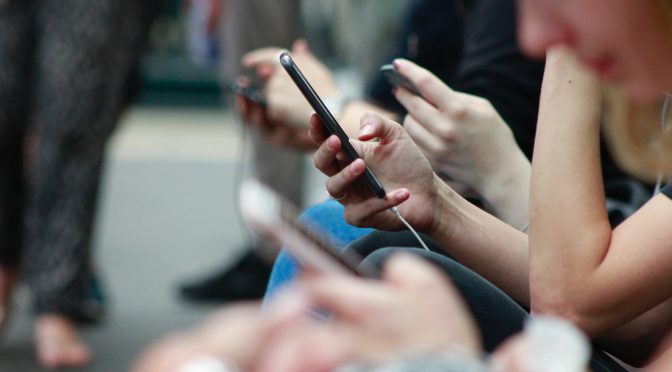
Today we basically have entire computers/cameras/telecommunication devices in our pockets (well lets be real…they are in our hands).  Plus there is the internet.  What a revolution that is.  We are now so connected with technological advances, how is it ever possible to be disconnected? Ah, my friends and therein lies the issue.  In a world of virtual connection, we lack more and more in actual connection.

“Alright Doc…that’s nothing new. Everyone knows that.” Do they?  Really?  I beg to differ. Here is the thing, I know that we have talked about how words have meaning in an earlier blog, however words don’t have all the meaning.  When you are talking to someone face to face there are so many other ways that we communicate.  For example, in my house we joke that mocking is our language of love.  In other words, we all speak fluent sarcasm and there are some dead pan faces that deliver these lines.  True comedians my friends.  If I didn’t see those faces and know the tone and intonation, read the body language, and ultimately feel my loving attachment to these people anytime we are in the same room together…well folks…I would think that they all hated me…a lot…like a lot, a lot.  Can’t deliver these conversations in a text or an email.  Can’t create the laughter in these statements even by phone.  No, these are truly communications that must happen in person.

And then there is the type of communication that facilitates connection, using no words at all.  Like the touch of a loving hand, a pat on the back, a hug, or a kiss.  What about the words unarticulated, yet very much said in every one of those interactions? Those won’t happen through technology at all.  Even the best of emoji’s won’t express these enough.  Now clearly we make efforts with things like emoji’s, LOLs, or GIFs, yet it just isn’t the same.  I can type out all the actions that go into embracing someone in a hug, but the words I put on the page won’t even scratch the surface of the feeling you get when someone hugs us.  What a message that can be. It won’t ever be able to translate into words, much less delivered through technology.

So what we are left with is the false sense that we are connecting, when actually we are connecting much less than when we just went outside and played with our friends, took a walk with our heads up saying hello to passersby instead of reading the text that just buzzed across our phone.  It’s actually an illusion of connection. And of course there are also the illusions of perfection that we peddle to one another.  Our Instagram lives that point out only when things are great (or at least make it look like they’re great).

And then there is the real culprit of disconnection in a technologically integrated society. What’s that you ask? Anonymity.  This one is a real silent killer and its motis operandi is to kill us slowly.  Death by Tweets. Am I right?  We can be politically fundamentalist and engage in battles of whit and will that far exceed anything we would have the guts to do in person.  And for kids it can be much worse.  In a time when their brains are just developing, when they are still impulsive, not great at thinking things through, and without any hindsight to have learned from, our kids can be even more hateful to one another. And this is the kind of environment we have been in as school shootings have escalated in frequency and intensity.

Do you know how many people I see that have social anxiety?  I see adults and children and I see far more folks in all age groups that have social anxiety than I do kids with ADHD.  We thought that was epidemic and over-medicated…guess what is happening with this anxiety epidemic?  Lots of scripts and very little teaching of how to be in public, how to have a conversation, or how to be with other people in general.  And what do you think will happen once the generations who have been raised in technology and have less in-person interaction start teaching their kids how to interact?  What will that look like?  It’s worth thinking about.

So you see, this is why my feeling is that there is more disconnection than connection these days. I don’t think phones are bad. They are plastic, glass, and wires. They have no inherent goodness or badness.  It is the user that determines the value.  So I challenge you to start thinking about how you are using these devices, or even how much.  In an earlier blog I referenced a way to do look at how to manage your time to be more in alignment with your values.  Mostly though, I challenge you to look up at the world, not down on your phone.  I challenge you to look people in the eye as you’re walking by them.  I challenge you to smile at someone, instead of sending a text.  I encourage you to pay more attention to the messages you receive that don’t have words and to give those same unsaid messages to others. Connect with people in real time, with real actions and real communication.  See what happens.  You may surprise yourself and like it more than you think.