Tag Archives: emotional wellness

Empty Nest Syndrome: What Nobody Tells You

Summary:

This episode explores the emotional shock many midlife women feel when they drop a child off at college and come home to a quieter house. Dr. Natalie reframes empty nesting as more than just missing a child – it can be a loss of role, identity, and a long-standing way of getting needs met. She also connects this transition to grief, self-worth, caregiving patterns, and the need to build a new relationship with yourself as kids become independent.


Keywords and Phrases

  • empty nesting
  • grief
  • identity loss
  • motherhood
  • caregiving
  • self-worth
  • pattern interrupt
  • self-abandonment
  • midlife transition
  • perimenopause
  • inner critic
  • rebuilding yourself
  • self-reflection

Quotes:

  • “The reward for being a good parent is that they’re gonna eventually not be in our lives every day.”
  • “The person you’re gonna pick up and caretake for the rest of your life, that’s you.”
  • “Self-abandonment is not a great way to manage grief and loss.”
  • “What hurts is not just the child leaving, but the loss of being needed.”
  • The inner critic often shows up when you’re trying something new.”
  • “The work now is building a relationship with yourself.”


Key topics:

  • Empty nesting can feel intolerable because it is not only separation, it is a major identity disruption.
  • Dr. Natalie says many women are grieving the loss of the mom role, not just the child leaving home.
  • If self-worth has been tied to being a “good mom,” empty nesting can trigger a crisis of identity.
  • Some women have also used parenting as the main way they have ever felt loved, which makes the transition even harder.
  • Parenting may have functioned as a coping strategy to numb old wounds, especially for women who grew up in emotionally barren families.
  • Her central message is that the path forward is building a relationship with yourself through reflection, counseling, new friendships, and honest self-inquiry.

Timestamps

(00:00) Why empty nesting hits so hard in midlife

(01:22) The grief of letting kids go

(03:46) When over-contacting children can damage the relationship

(04:16) Grieving the role, not just the child

(05:44) When worthiness gets tied to caregiving

(08:06) Parenting as a source of being loved

(09:03) Grief as a recurring process, not a single emotion

(10:03) Building a relationship with yourself

(11:28) Parenting as a way to avoid other unresolved issues

(12:18) Why counseling or coaching can help in this transition

(13:39) How Gen X women were trained to hide needs

(14:38) Midlife, menopause, and lower distress tolerance

(16:31) Why caretaker dynamics strain adult relationships

(18:27) Relearning relationships and needs outside the family role

(20:48) Empty nesting as a pattern interrupt

(21:47) Moving through transition with less resilience

(23:15) Journaling, reflection, and making space for self-knowledge

(24:42) The inner critic as a sign of change, not failure

(27:09) Giving yourself permission to grieve

(28:32) Reorganizing life around your own needs

(29:31) Why self-abandonment makes adjustment harder

DISCLAIMER:

The content in this podcast and video is not a replacement for therapy and is not clinical, medical, or mental health treatment. Dr. Natalie Marr is a Licensed Psychologist in the state of Minnesota. Her work with https://LearnToLoveYourStory.com⁠⁠⁠⁠⁠⁠⁠⁠⁠⁠⁠⁠⁠⁠, https://NatalieMarrCounseling.com⁠⁠⁠⁠⁠⁠⁠⁠⁠⁠⁠⁠⁠,⁠⁠ and all affiliate social media entities is educational and coaching based ONLY. She IS NOT offering therapeutic services of any kind on these mediums.


If you or someone you know is having a mental health crisis or having thoughts of suicide, please use the following crisis resources (this is not an exhaustive list of available resources):

National Suicide Prevention Lifeline: ⁠⁠⁠⁠⁠⁠⁠⁠⁠⁠⁠⁠⁠⁠⁠⁠⁠https://suicidepreventionlifeline.org/⁠⁠⁠⁠⁠⁠⁠⁠⁠⁠⁠⁠⁠ ⁠⁠or CALL 988

Crisis Text Line:⁠ ⁠⁠⁠⁠⁠⁠⁠⁠⁠⁠⁠⁠⁠⁠⁠https://www.crisistextline.org/ ⁠⁠⁠⁠⁠⁠⁠⁠⁠or Text HOME to 741741

How the Need to Be Needed to Feel Loved Is Wrecking My Midlife Relationships

Summary:

Dr. Natalie explores how childhood trauma and cultural conditioning influence women’s relationships in midlife, emphasizing the importance of self-awareness and self-compassion to foster healthier connections and personal growth.


Previous episode referenced in today’s podcast: https://open.spotify.com/episode/0UrV8UKGgDdedTdw50BUdM?si=HphWMDhFTpCeMN4nJTsbNg

Keywords

midlife, relationships, childhood trauma, self-awareness, self-compassion, women, emotional health, neurochemistry, estrogen, codependency

Key topics

  • Impact of childhood trauma on adult relationships
  • Neurochemical changes during perimenopause
  • The role of estrogen in emotional resilience
  • Patterns of codependency and caretaking
  • The importance of self-awareness and self-compassion
  • Cultural influences on women’s self-worth
  • Strategies for breaking unhealthy relationship cycles
  • The significance of therapy and self-reflection

Takeaways:

  • Childhood trauma creates ingrained relationship patterns that persist into midlife.
  • Estrogen decline in perimenopause reduces stress tolerance and can exacerbate emotional challenges.
  • Self-awareness and self-compassion are crucial for recognizing and changing harmful patterns.
  • Many women unconsciously conflate being needed with being loved due to early life conditioning.
  • Healing involves understanding the origins of these patterns and actively working to rewrite them.

Sound bites

  • “Unhelpful patterns from childhood still shape us.”
  • “Estrogen decline reduces stress tolerance.”
  • “Neurochemicals protect us, but they fade in midlife.”


DISCLAIMER:

The content in this podcast and video is not a replacement for therapy and is not clinical, medical, or mental health treatment. Dr. Natalie Marr is a Licensed Psychologist in the state of Minnesota. Her work with ⁠⁠(⁠⁠⁠⁠⁠⁠⁠⁠⁠⁠⁠https://LearnToLoveYourStory.com⁠⁠⁠⁠⁠⁠⁠⁠⁠⁠⁠⁠⁠⁠)⁠ ⁠(⁠⁠⁠⁠⁠⁠⁠⁠⁠⁠⁠⁠⁠⁠https://NatalieMarrCounseling.com⁠⁠⁠⁠⁠⁠⁠⁠⁠⁠⁠⁠⁠),⁠ and all affiliate social media entities is educational and coaching based ONLY. She IS NOT offering therapeutic services of any kind on these mediums. If you or someone you know is having a mental health crisis or having thoughts of suicide, please use the following crisis resources (this is not an exhaustive list of available resources):


National Suicide Prevention Lifeline: ⁠⁠⁠⁠⁠⁠⁠⁠⁠⁠⁠⁠⁠⁠⁠⁠⁠https://suicidepreventionlife ⁠⁠or CALL 988


Crisis Text Line:⁠ ⁠⁠⁠⁠⁠⁠⁠⁠⁠⁠⁠⁠⁠⁠⁠https://www.crisistextline.org/⁠⁠⁠⁠⁠⁠⁠ ⁠⁠⁠⁠⁠⁠⁠⁠⁠or Text HOME to 741741

The Exhausting Lie that Perfectionism Sold You

Summary:

This episode explores the impact of perfectionism, societal conditioning, and hormonal changes during midlife on women’s mental health. Dr. Natalie shares data, personal insights, and practical advice to help women love themselves and navigate this transformative phase with resilience.

Keywords:

midlife, women, perfectionism, mental health, hormonal changes, self-love, resilience, menopause, societal conditioning

Key topics:

  • Perfectionism and its impact on mental health
  • The connection between hormonal changes and emotional well-being
  • Societal conditioning and self-betrayal in women
  • Practical steps to cultivate self-love and resilience

Sound bites:

  • “Relearn who you are and what you want.”
  • “Deserving love even when you screw up.”
  • “You do not have to be good.”

Chapters:

  • 00:00 The Burden of Perfectionism in Midlife
  • 03:24 Understanding the Mental Health Crisis for Women
  • 11:29 The Impact of Hormonal Changes and Medical Misunderstandings
  • 28:13 Reclaiming Self-Worth and Breaking Free from Perfectionism
  • 36:18 Introduction and Disclaimer
  • 37:55 Crisis Resources and Support

Resources & Links to Connect with Dr. Natalie:

Resources:

DISCLAIMER:

The content in this podcast and video is not a replacement for therapy and is not clinical, medical, or mental health treatment. Dr. Natalie Marr is a Licensed Psychologist in the state of Minnesota. Her work with Learn To Love Your Story coaching ⁠⁠(⁠⁠⁠⁠⁠⁠⁠https://LearnToLoveYourStory.com⁠⁠⁠⁠⁠⁠⁠⁠⁠⁠)⁠ and her private practice ⁠(⁠⁠⁠⁠⁠⁠⁠⁠⁠⁠https://NatalieMarrCounseling.com⁠⁠⁠⁠⁠⁠⁠⁠⁠),⁠ and all affiliate social media entities are educational ONLY. She IS NOT offering therapeutic or coaching services of any kind on these mediums.

If you or someone you know is having a mental health crisis or having thoughts of suicide, please use the following crisis resources (this is not an exhaustive list of available resources):

The Hidden Trauma of Midlife: How Childhood Shapes Your Stress Resilience

Summary

Dr. Natalie explores the intersection of midlife challenges, hormonal changes, and childhood trauma, emphasizing that women’s struggles are often systemic and not personal failures. She discusses how hormonal shifts affect stress resilience and the importance of inner work and therapy to achieve a centered midlife.

Keywords

midlife, hormonal changes, childhood trauma, stress resilience, inner child work, therapy, estrogen, progesterone, systemic issues, personal growth

Key Topics

  • Hormonal changes in midlife and their impact on stress resilience
  • The role of childhood trauma in adult midlife struggles
  • Inner child work and shadow work as tools for healing
  • Systemic societal expectations and their effects on women in midlife

Key Frameworks

  • Inner Child Work
  • Shadow Work
  • Core Belief Systems

Action Items

  • Seek therapy to unpack childhood trauma
  • Consider hormone therapy with medical guidance
  • Set boundaries to protect your mental health
  • Prioritize love and acceptance of your current life

Sound Bites

“Childhood trauma can resurface in midlife.”
“Love your life right now, all of it.”
“This was never your fault.”

Chapters

00:00 The Burden of Expectations on Women
13:18 Childhood Trauma and Its Resurgence in Midlife
19:07 Introduction and Disclaimer
20:43 Crisis Resources and Support

Midlife/Trauma Resources

  • Therapy for Trauma and Inner Child Work – https://www.psychologytoday.com/us/therapists
  • Hormone Replacement Therapy (HRT) – https://www.mayoclinic.org/tests-procedures/hormone-replacement-therapy
  • Understanding Perimenopause and Menopause – https://www.womenshealth.gov/menopause

Resources & Links to Connect with Dr. Natalie

  • Website: ⁠⁠https://LearnToLoveYourStory.com⁠⁠ ⁠⁠
  • Facebook: ⁠facebook.com/learntoloveyourstory⁠⁠
  • Instagram:⁠⁠ instagram.com/dr.nataliemarr⁠⁠
  • Linked In: ⁠⁠linkedin.com/in/natalie-m-marr-psy-d-lp-6a9298147⁠⁠
  • Tik Tok: ⁠⁠tiktok.com/@doc.natalie

Disclaimer

⁠⁠The content in this podcast and video is not a replacement for therapy and is not clinical, medical, or mental health treatment. Dr. Natalie Marr is a Licensed Psychologist in the state of Minnesota. Her work with ⁠⁠(⁠⁠⁠⁠https://LearnToLoveYourStory.com⁠⁠⁠⁠⁠⁠⁠)⁠, ⁠(⁠⁠⁠⁠⁠⁠⁠https://NatalieMarrCounseling.com⁠⁠⁠⁠⁠⁠),⁠ and all affiliate social media entities is educational and coaching based ONLY. She IS NOT offering therapeutic services of any kind on these mediums. If you or someone you know is having a mental health crisis or having thoughts of suicide, please use the following crisis resources (this is not an exhaustive list of available resources):

National Suicide Prevention Lifeline: ⁠⁠⁠⁠⁠⁠⁠⁠⁠⁠https://suicidepreventionlifeline.org⁠/⁠⁠⁠⁠⁠⁠⁠ CALL 988

Crisis Text Line: ⁠⁠⁠⁠⁠⁠⁠⁠⁠⁠https://www.crisistextline.org/⁠⁠⁠⁠ ⁠⁠⁠⁠⁠⁠Text HOME to 741741

Episode 69 – “Are they really like that person or am I just thinking they’re like that person?”

In episode of Life Sucks, Now What?!?, Dr. Natalie discusses the concept of having big emotional reactions to people or situations that remind us of past experiences. She explains that our body and mind are wired to recognize patterns and make quick decisions based on past experiences. However, this can lead to overreactions and misunderstandings in current situations.

Dr. Natalie suggests using mindfulness and self-awareness to recognize when we are falling into old patterns and to interrupt those patterns. She emphasizes the importance of choosing new ways of responding and experimenting with different approaches.

Takeaways:

  • Our body and mind are wired to recognize patterns and make quick decisions based on past experiences.
  • Having big emotional reactions to people or situations that remind us of past experiences is a natural response.
  • Mindfulness and self-awareness can help us recognize when we are falling into old patterns.
  • Interrupting old patterns and choosing new ways of responding can lead to healthier and more effective interactions.

Do any of these sound like you?

    • Feel a sense of lack, despite success in life or having done everything “right”
    • Struggle to articulate how you feel to others
    • Experience guilt about how you’re feeling
    • Have lost your way
    • Are struggling to overcome turmoil in your life
    • Have become resigned to accepting a life you don’t love

Many of us are suffering like this — daily life has become an ordeal, and we don’t know where or how to find help.

Dr. Natalie’s Online Courses and Coaching CAN HELP. Click below and get started.

Click Here for Your FREE Gift


You don’t want to miss a thing we are doing here at LearnToLoveYourStory.com.  From our weekly podcasts to our library of blogs and videos that can help you step into a more centered life.

Allow Dr. Natalie to guide you on this empowering adventure to break free, rediscover your passion, and create the life you’ve always envisioned for yourself. Your journey to empowerment starts here. Join our Mailing List today!

Join Now


Need more clarity on your midlife journey? Sign up for a complimentary call with Dr. Natalie to explore if her transformative coaching program aligns with your aspirations.

Get personalized answers to your questions and discover if Dr. Natalie can help you untangle where you life is now and design the life you want to be living.

Don’t miss the opportunity to embark on a life-changing experience – schedule your complimentary call today and take the first step toward designing the life you deserve!

Please press the “START” button below to answer a few questions and schedule your consultation:


Keywords: emotional reactions, past experiences, patterns, mindfulness, self-awareness, interrupting patterns, choosing new responses, Dr. Natalie podcast, podcast for women, Midlife Crisis to a Centered Life Thriving

Disclaimer

The content in this podcast and video is not a replacement for therapy and is not clinical, medical, or mental health treatment. Dr. Natalie Marr is a Licensed Psychologist in the state of Minnesota. Her work with LearnToLoveYourStory.com and all affiliate social media entities is educational and coaching based ONLY. She IS NOT offering therapeutic services of any kind on these mediums.

If you or someone you know is having a mental health crisis or having thoughts of suicide, please use the following crisis resources (this is not an exhaustive list of available resources):

National Suicide Prevention Lifeline: https://suicidepreventionlifeline.org/

CALL 988

Crisis Text Line: https://www.crisistextline.org/

Text HOME to 741741

Episode 67 – Challenging the Thought “Shouldn’t I Have Known Better”

In this episode of Midlife Crisis to a Centered Life Thriving, Dr. Natalie shares with us one of her own personal experiences of feeling shut down and invalidated when someone questioned, ‘Shouldn’t you have known better?’ In addition to sharing her story, she provides insights for us on overcoming shame, reprogramming our earlier social conditioning, and embracing failure as a part of growth. The conversation emphasizes the importance of adopting a growth mindset and seeking excellence over perfection, especially during midlife. It encourages listeners to challenge societal norms in order to live a centered life thriving.

Takeaways:
  • Feeling shut down and invalidated by comments like ‘Shouldn’t you have known better?’ can trigger shame and self-doubt.
  • Overcoming shame and reprogramming conditioning involves embracing failure as a part of growth and adopting a growth mindset.
  • Challenging societal norms and embracing a philosophy of seeking excellence over perfection is essential for living a centered life thriving, especially during midlife.


Do any of these sound like you?

    • Feel a sense of lack, despite success in life or having done everything “right”
    • Struggle to articulate how you feel to others
    • Experience guilt about how you’re feeling
    • Have lost your way
    • Are struggling to overcome turmoil in your life
    • Have become resigned to accepting a life you don’t love

Many of us are suffering like this — daily life has become an ordeal, and we don’t know where or how to find help.

Dr. Natalie’s Online Courses and Coaching CAN HELP. Click below and get started.

Click Here for Your FREE Gift


You don’t want to miss a thing we are doing here at LearnToLoveYourStory.com.  From our weekly podcasts to our library of blogs and videos that can help you step into a more centered life.

Allow Dr. Natalie to guide you on this empowering adventure to break free, rediscover your passion, and create the life you’ve always envisioned for yourself. Your journey to empowerment starts here. Join our Mailing List today!

Join Now


Need more clarity on your midlife journey? Sign up for a complimentary call with Dr. Natalie to explore if her transformative coaching program aligns with your aspirations.

Get personalized answers to your questions and discover if Dr. Natalie can help you untangle where you life is now and design the life you want to be living.

Don’t miss the opportunity to embark on a life-changing experience – schedule your complimentary call today and take the first step toward designing the life you deserve!

Please press the “START” button below to answer a few questions and schedule your consultation:


Keywords: vulnerability, shame, growth mindset, conditioning, midlife crisis, resilience, self-compassion, failure, perfectionism, societal norms, centered life thriving, Dr. Natalie, Midlife Crisis to a Centered Life Thriving, podcast for women, podcast for women, podcast for midlife

Disclaimer

The content in this podcast and video is not a replacement for therapy and is not clinical, medical, or mental health treatment. Dr. Natalie Marr is a Licensed Psychologist in the state of Minnesota. Her work with LearnToLoveYourStory.com and all affiliate social media entities is educational and coaching based ONLY. She IS NOT offering therapeutic services of any kind on these mediums.

If you or someone you know is having a mental health crisis or having thoughts of suicide, please use the following crisis resources (this is not an exhaustive list of available resources):

National Suicide Prevention Lifeline: https://suicidepreventionlifeline.org/

CALL 988

Crisis Text Line: https://www.crisistextline.org/

Text HOME to 741741

Exhausted? Overwhelmed? Here’s the Solution – Love Yourself First!!!

Sometimes there are just people, times, or situations that really drain us of all we have to give. This is a tell tale sign that our input is not outweighing our output. We wouldn’t expect a car to drive 300 miles on an empty tank of gas, yet we often expect this of ourselves. Lets change that. Here are some things you can do:

1) EXTRA Self-Care This Week:

  • Get your body moving
  • Set boundaries on how much news you watch or social media you scroll through
  • Play games
  • Listen to music that gets your spirit lifted and your body grooving
  • Read a book
  • Dance like no one is watching
  • Do the things that bring you joy on a small scale or a big one
  • Just do them. Do lots of them. And do them over and over.

Emotional Exhaustion in large part comes from our inability to give more without replenishing ourselves first. Read that again and think about it. If you’re afflicted with the social conditioning that tells you your worth comes from how much you give of yourself, then you’ve known this kind of exhaustion. It’s a black hole. You can never give enough of yourself to satisfy this false ideal that once you’ve given enough you will arrive at your ultimate worth. Instead you keep giving until the point of overwhelm, not feeling worthy.

So invert this principle. Seriously. Invert this process of giving to others before yourself on its head. Love yourself first and foremost and watch what happens.

woman covering face with book on bed
Photo by Lina Kivaka on Pexels.com

Which leads me to my second reminder to us for the week:

2) SELFISH is the New SELFLESS

I mean it. We have to throw out these ideas that we have to do things for others at a cost to ourselves. It creates a ledger of sorts. It has yourself in one column and others in another column. You start with a finite amount of you and quickly deplete your emotional energy when you give and give and give and give to others by taking and taking and taking and taking from your column on the ledger. You’re swiftly in debt, but only to yourself. And because you’re putting you last and others first, you remain in debt and keep creating more of it.

So…INVERT this. Instead of giving OF yourself first, give TO yourself first. Always.

  • Give yourself the LOVE you need, so you can love others
  • Give yourself the RESPECT you need, so you may respect others
  • Give yourself the TIME you need, so you have time for others

You see when we are full with what we need FIRST, we can give so much more. When we deplete ourselves by giving more to others than to ourselves, our worth inherently devalues. Yet our culture tells us that our worth is in this depletion of self to be selfless for others. Which honestly means you become yourself less.

I call BS!!! It’s simple math here (and those who know me, know math is not my favorite…so if I am pulling it out then I mean business). If we add to our worthiness by giving to ourselves first, there is more worth to be shared. If we take from our worthiness to give to others before ourselves, then eventually we will be depleted and devalue ourselves in the process.

We will be emotionally exhausted and eventually totally overwhelmed. And we will start to literally be unable to emotionally empathize with others. To see their point of view. To imagine walking a mile in their shoes. When we lose sight of these things the value of our giving diminishes more and more. Not to mention we become more and more awful to each other, the more and more we feel dehumanized ourselves.

If we add to our worthiness by giving to ourselves first, there is more worth to be shared. If we take from our worthiness to give to others before ourselves, then eventually we will be depleted and devalue ourselves in the process.

Natalie M. Marr, Psy.D., LP

So take a minute. I’m serious! Take a few if you need to. Think about how you can do some extra self care this week. Write it down! Yup. On an old fashioned piece of paper. Maybe a post-it. And stick those ideas in all the places you frequent. The bathroom mirror. Near the steering wheel on your car. In your daily planner. On the refrigerator. Be sure to have these ideas readily available and nagging at you this week so you remember to do them. THEN…watch what happens. When you give to yourself first you have more to give.

Need ideas? Listen to my latest podcast

And if you are still looking for help. Download my Free Self-Care Cheat Sheet here:


Don’t know if the Learn To Love Your Story could help you. Then take this quiz and see which Online Courses would best help you with your personal growth and development.

What Course Is Right For You?

So many of us get stuck at some point during our lives.  We know that we are not fully happy, yet we don't really know what's missing.  We just know that we thought it would feel better than this by now. So what gives?

Dr. Natalie's online courses are designed to help you build the skills you need not only to find out what seems to be missing in your life and keeping you stuck; her courses will help you liberate yourself from your past and starting designing the LIFE YOU HAVE ALWAYS WANTED.  

Take this quiz and receive an individualized recommendation from Dr. Natalie as to what course would be best for you and why these courses are specially designed to help you with what you need.

This image has an empty alt attribute; its file name is Copy-of-Aesthetic-Phone-Mockup-Instagram-Post-1080-%C3%97-1920-px-Instagram-Post-Square-6-1024x1024.png
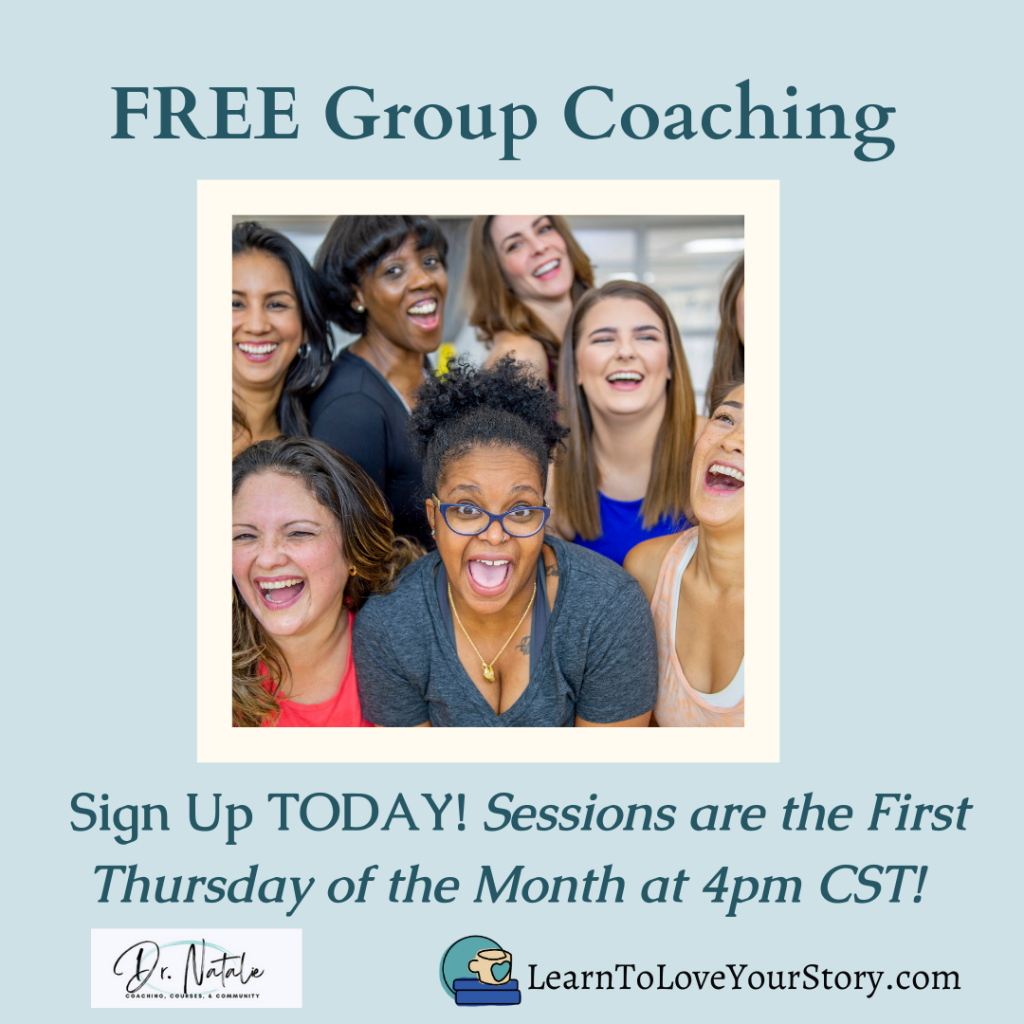
FREE Group Coaching For a Year – Join ANYTIME!

Join us monthly as we work together to help you design the life you have always wanted for yourself. No gimmicks! Just results! Dr. Natalie has nearly two decades of experience as a Clinical Psychologist and she is ready to help women in midlife break the chains of living in constant survival mode.

Please be sure to sign up. Even if you can’t join every month, you will also have access to online courses, workbooks, guided meditations, and get the video highlights sent out after each months group coaching event. It is well worth it!!! Make 2023 your year!!!


How To Work With Dr. Natalie

This image has an empty alt attribute; its file name is Grey-and-Orange-Photography-Quiz-Instagram-Post-Blog-Banner-Facebook-Post-Landscape-720-%C3%97-720-px.png
 

The Real Gift this Holiday Season

Merry Christmas Eve!  I waited until today to release my blog for the week, because I wanted to talk a little about giving and receiving.  What better time of year to do that than now, right?  So, let me start off with some questions.

What was the gift you brought to your corner of the world this year?

What gifts did you receive this year?

Were these gifts the ones you asked for or that were asked of you?  Or were they complete surprises (good or bad)?

What have you learned from your gifts, both given and received, and how will they impact you going forward?

Hmmm…those should get your mind stirring a bit.  What was the first thing to pop in your head as you read them?  Did it go something like, “What gift did I bring to my corner of the world?  Come on doc, the holidays are about hustle and bustle and who got the biggest and best present.  It’s completely commercialized. There is no gift here at all, other than a pain in my rear!”

Feel free to want to virtually slap me right now. Or write your wittiest and most sarcastic comment to me.  Believe me, I get it.  It is a commercialized season, because as I noted in my “What’s in a Word?” blog, we are marketed at from birth until death in America.  Tis’ the season to buy, buy, buy to fill the void in our lives, right?  But we all have felt how empty that can be.  The anti-climactic gathering of wrapping paper off the floor and playing with our new things for a few days or weeks. Then it’s back to the grind, right?  Or, maybe you just don’t have the money to keep up with all this commercialism and you are feeling the weight of not living up to this hype.  It can be particularly hard when you have children that watch the Christmas specials and think that that they’ve been on the “Nice List” all year, so surely Santa will be bringing the new (insert the item of desire in the blank).  So, what happens when Santa doesn’t?  It’s possible to believe that you weren’t good enough.  Or to become a hardened cynic to this commercialized holiday. And all sorts of other possibilities in between.

So here is my challenge for this week (well actually it’s my challenge to you for this coming year).  I want you to think about those questions I posed at the start of this blog.  I want you to really meditate on these.  Why?  Because, I would contest that Christmas is not about what we get under the tree.  This holiday season in general, no matter what it is that you celebrate, isn’t really about material things.  It is about us!  You read that right.  This season can be a reminder to us that we have something to bring to this world.  It’s also about honoring each other, by learning to be better receivers of the gifts others have to give us. Whether the gifts you have received and given felt good or bad; or were stingily kept to yourself and those you care about, because your time is valuable and you are not obligated to give to those who haven’t deserved it; or you have poured yourself out over and over again and are now feeling depleted; and all of the variations and/or combinations of these. Whether it is any or all of these, there is a lesson to be learned in giving and receiving. And it’s one that our communities are so hungry for right now.

I know I know, I am waxing eloquent again and keeping the good part of the message for last. Hey, you must have read some of my other blogs and are getting to know me better;)

So, “Pray tell doc! What the heck are you getting at?”

Here is what I am getting at. The gift is not the material item that you receive or give. It’s about what the action of giving and receiving does to us. Especially giving and receiving when it is not deserved or expected. This kind of giving and receiving is the most precious of all, because it offers love to one another and to ourselves.

And what if the gift comes in the form of pain? What about when we have been withholding our gifts from the world, hording them for ourselves? If this is the case, then look a little deeper. What is the message in this? Is it that in hording our gifts we are feeling less and less connected to others and less and less deserving of their love and affection?  Or, have we not received well, the gifts we were given?  Maybe because they came in the form of a message we didn’t want to hear, or because the gifts were given through the vehicle of emotional pain. And now we are feeling isolated and bereft, not worthy and accepted…and certainly not loved.

Gifts will come in all shapes and sizes.  In all gradations of feeling good and feeling bad.  If we resist these gifts they will keep coming back to us, until we learn to receive them, invite them into our hearts, and know the true purpose they have to offer us.  And if right now you are thinking to yourself that you know someone that has not been looking at her or his painful gifts in the right way…STOP!  Look internally at whether being in that situation with this person has you not looking at a painful gift you don’t want to accept for yourself. It’s very easy to slide into seeing when this happens to others, yet struggling to see that when we see it in others it may be a reflection that it is actually happening in ourselves.

Take a hard look.  Challenge yourself to give more, to receive more, and to be more mindful of the real meaning behind these gifts.  When a gift comes in the form of hurting, insult, or some other negativity…challenge yourself to see the real message. The one that shows you what there is to be learned here. And don’t be a Scrooge. Give away those gifts. We are only here for a while and we will gain more from what we give away than what we ever receive really.  And believe that you are worthy of these gifts.  There is a reason they have come to you.  Take them in, cherish them, and use them the way they were intended to be used.

I will leave you with a poem that hangs in Mother Teresa’s home for children in Calcutta.  Someone reminded me of this poem in recent week and it really sums up the meaning of giving and receiving, I think.  What are your thoughts?  I’d love to hear from you.

People are often unreasonable, irrational, and self-centered.  Forgive them anyway.

If you are kind, people may accuse you of selfish, ulterior motives.  Be kind anyway.

If you are successful, you will win some unfaithful friends and some genuine enemies.  Succeed anyway.

If you are honest and sincere people may deceive you.  Be honest and sincere anyway.

What you spend years creating, others could destroy overnight.  Create anyway.

If you find serenity and happiness, some may be jealous.  Be happy anyway.

The good you do today, will often be forgotten.  Do good anyway.

Give the best you have, and it will never be enough.  Give your best anyway.

In the final analysis, it is between you and God.  It was never between you and them anyway.

-this version is credited to Mother Teresa, based on The Paradoxical Commandments by Dr. Kent M. Keith