Dr. Natalie shares a personal story about handling petty moments, grief, and the importance of protecting your energy and self-worth during midlife. This episode offers insights into emotional resilience, boundaries, and self-acceptance.
Keywords:
midlife, emotional resilience, boundaries, self-worth, personal growth, grief, self-acceptance, mental health, self-protection, life transitions
Key topics:
Handling petty moments and emotional triggers
The importance of boundaries and self-protection
Grief and loss during midlife
Self-acceptance and personal growth
Navigating relationships and social judgments
Takeaways:
It’s normal to feel petty or triggered; what matters is how you handle it.
Protect your energy fiercely and set boundaries around your self-worth.
Grief is a layered process, especially during major life transitions.
Your self-worth is independent of others’ opinions or judgments.
Reframing social judgments as small-mindedness helps maintain emotional resilience.
Sound bites:
“Growth doesn’t mean we don’t get triggered.”
“Protect your energy fiercely in midlife.”
“Your self-worth is independent of others’ opinions.”
Chapters:
00:00 Introduction to Petty Moments and Growth 2972:11:16 Sharing Personal Stories of Divorce and Loss 6999:58:15 The Pain of Being Misjudged and Abandoned 11694:25:11 The Fast Pace of Life and Aging Children 14888:52:05 Grief and Rejection in Midlife 196111:05:39 The Temptation to Be Petty and How to Resist 251666:39:27 Understanding Self-Worth Beyond Roles 296944:26:18 Setting Boundaries and Protecting Your Energy 333888:53:07 The Power of Self-Validation and Moving On
DISCLAIMER:
The content in this podcast and video is not a replacement for therapy and is not clinical, medical, or mental health treatment. Dr. Natalie Marr is a Licensed Psychologist in the state of Minnesota. Her work with (https://LearnToLoveYourStory.com), (https://NatalieMarrCounseling.com), and all affiliate social media entities is educational and coaching based ONLY. She IS NOT offering therapeutic services of any kind on these mediums. If you or someone you know is having a mental health crisis or having thoughts of suicide, please use the following crisis resources (this is not an exhaustive list of available resources):
This episode explores the impact of perfectionism, societal conditioning, and hormonal changes during midlife on women’s mental health. Dr. Natalie shares data, personal insights, and practical advice to help women love themselves and navigate this transformative phase with resilience.
The content in this podcast and video is not a replacement for therapy and is not clinical, medical, or mental health treatment. Dr. Natalie Marr is a Licensed Psychologist in the state of Minnesota. Her work with Learn To Love Your Story coaching (https://LearnToLoveYourStory.com) and her private practice (https://NatalieMarrCounseling.com), and all affiliate social media entities are educational ONLY. She IS NOT offering therapeutic or coaching services of any kind on these mediums.
If you or someone you know is having a mental health crisis or having thoughts of suicide, please use the following crisis resources (this is not an exhaustive list of available resources):
In this heartfelt episode, Dr. Natalie addresses midlife women feeling overwhelmed by the pressure to fix and manage everything alone. She offers insight into how hyper-independence and the fear of abandonment can contribute to burnout and midlife struggles—and most importantly, how self-love can help rewrite these patterns.
Key Topics:
The emotional toll of hyper-independence in midlife women
The neurochemistry of pursuit and addiction to dopamine hits
Childhood experiences shaping adult patterns of fixing and pleasing
Recognizing and interrupting the spiral of justification and validation
The importance of self-love as an antidote to burnout and scarcity mindset
How fear of abandonment fuels hyper-independence
Practical steps to love yourself through mistakes and vulnerabilities
Moving away from rescuing everyone and focusing on personal peace
Time Stamps
00:00 – Addressing hyper-independent women in midlife
02:09 – The neurochemical roots of pursuit and addiction to dopamine
03:34 – How the chase reinforces the cycle of burnout
04:33 – Personal stories of controlling or fixing others
05:58 – Childhood patterns influencing adult need for approval
06:53 – Recognizing the spiral of justifying and validating
08:22 – The pain of not being liked or validated
09:04 – The risks of over-investment in work and relationships
10:30 – How derailments in pursuit reveal deeper patterns
11:56 – The spiral of self-justification in times of stress
13:20 – The link between childhood chaos and adult control issues
14:19 – Self-love as the key to breaking free from cycles
16:41 – The importance of loving yourself despite mistakes
19:34 – Understanding the fear of rejection and scarcity mindset
20:03 – Letting go of blame and the need for approval
21:01 – Managing relationships without spiraling into chaos
22:24 – Embracing age and experience for self-compassion
23:21 – The power of loving your story, including dysfunction
24:19 – Sharing this message with other midlife women
25:17 – Letting go of the cycle of justification and abandonment fears
26:15 – Finding peace and building inner self-worth
The content in this podcast and video is not a replacement for therapy and is not clinical, medical, or mental health treatment. Dr. Natalie Marr is a Licensed Psychologist in the state of Minnesota. Her work with (LearnToLoveYourStory.com), (NatalieMarrCounseling.com), and all affiliate social media entities is educational and coaching based ONLY. She IS NOT offering therapeutic services of any kind on these mediums.
If you or someone you know is having a mental health crisis or having thoughts of suicide, please use the following crisis resources (this is not an exhaustive list of available resources):
Summary In this episode, Dr. Natalie explores the concept of ‘The Great Unlearning,’ a transformative journey that challenges the societal belief that doing everything right leads to a fulfilling life. She reflects on her personal experiences, particularly during midlife, where she realized that striving for perfection and external validation often leads to burnout and disillusionment. Dr. Natalie emphasizes the importance of self-worth and the need to reclaim it from within, rather than through external achievements or approval. Through poignant anecdotes, she illustrates how the pressure to conform to societal expectations can lead to a double life and emotional turmoil, ultimately advocating for a shift towards self-love and acceptance.
Dr. Natalie introduces the metaphor of the tugboat versus the lighthouse to illustrate the difference between exhausting oneself in the pursuit of perfection and standing firm in one’s self-worth. She encourages listeners to reflect on their own lives, identifying where they may be sacrificing their well-being in the name of doing everything right. The episode serves as a powerful reminder that true fulfillment comes from within, and that midlife can be an opportunity for profound personal growth and self-discovery.
Keywords: midlife, self-worth, personal growth, self-love, great unlearning, emotional well-being, tugboat lighthouse metaphor, reclaiming self-worth, Dr. Natalie
Takeaways: The version of you that you’re most proud of may be blocking your actual life. Midlife can be an invitation to examine the mess of our lives and love it as it is. Reclaiming self-worth from the inside out is essential for true fulfillment.
Sound bites: “What if I told you that the version of you that you’re most proud of… is in the way of your actual life?” “Today we’re gonna talk about the great unlearning.” “You do not need to fix yourself. You just need to find yourself.”
Chapters: 00:00 Introduction to The Great Unlearning 03:49 A Holiday Dinner Reflection 10:20 The Tugboat vs. The Lighthouse 18:10 The Power of Self-Love 23:39 Reflecting on Your Journey JOIN the https://LearnToLoveYourStory.com Mailing List! Join my newsletter and receive my FREE video and workbook, “Freeing Yourself: A Guide for Letting Go of Other People’s Opinions”
SIGN UP on the website at https://dashboard.mailerlite.com/forms/762561/109840834025752017/share DISCLAIMER: The content in this podcast and video is not a replacement for therapy and is not clinical, medical, or mental health treatment. Dr. Natalie Marr is a Licensed Psychologist in the state of Minnesota. Her work with (https://LearnToLoveYourStory.com), (https://NatalieMarrCounseling.com), and all affiliate social media entities is educational and coaching based ONLY. She IS NOT offering therapeutic services of any kind on these mediums. If you or someone you know is having a mental health crisis or having thoughts of suicide, please use the following crisis resources (this is not an exhaustive list of available resources): National Suicide Prevention Lifeline: https://suicidepreventionlifeline.org/ CALL 988Crisis Text Line: https://www.crisistextline.org/ Text HOME to 741741
In this podcast episode, Dr. Natalie explores the emotional challenges faced by women in midlife during the holiday season, particularly in relation to hormonal changes and the pressures of self-care. She discusses the impact of menopause on emotional well-being and the importance of self-compassion as women navigate these changes. The conversation emphasizes the need for community support and acceptance of one’s evolving identity during this transitional phase of life.
Takeaways
The holiday season can amplify feelings of irritability and self-focus in midlife women.
Hormonal changes during menopause significantly affect emotional well-being.
Women often prioritize others’ needs over their own, leading to burnout.
It’s important to give oneself grace and acknowledge limitations during the holidays.
Self-compassion is crucial for navigating midlife transitions.
Emotional awareness shifts during menopause, leading to a more egocentric perspective.
Accepting the current version of oneself is key to personal growth.
Building self-awareness is essential for overcoming harmful habits.
Community support can alleviate feelings of isolation during midlife.
Midlife can be a time of significant personal growth and transformation.
Keywords: midlife, menopause, holiday stress, self-care, emotional well-being, hormonal changes, self-compassion, personal growth, women empowerment, mental health
Sound bites
“We want the routine to be the same.” “It’s okay to give yourself grace.” “You really aren’t alone in this.”
Chapters
00:00 Navigating Holiday Emotions in Midlife 09:45 Understanding Brain Changes During Midlife 17:38 Embracing Self-Compassion and Growth in Midlife
JOIN the LearnToLoveYourStory.com (https://LearnToLoveYourStory.com) Mailing List! Join my newsletter and receive my FREE video and workbook, “Freeing Yourself: A Guide for Letting Go of Other People’s Opinions” SIGN UP on the website at https://dashboard.mailerlite.com/forms/762561/109840834025752017/share
DISCLAIMER: The content in this podcast and video is not a replacement for therapy and is not clinical, medical, or mental health treatment. Dr. Natalie Marr is a Licensed Psychologist in the state of Minnesota. Her work with (https://LearnToLoveYourStory.com), (https://NatalieMarrCounseling.com), and all affiliate social media entities is educational and coaching based ONLY. She IS NOT offering therapeutic services of any kind on these mediums.
If you or someone you know is having a mental health crisis or having thoughts of suicide, please use the following crisis resources (this is not an exhaustive list of available resources):
National Suicide Prevention Lifeline: https://suicidepreventionlifeline.org/ CALL 988
Crisis Text Line: https://www.crisistextline.org/ Text HOME to 741741
Do you ever feel like you are just not getting where you want to be in your life? Like you have worked so very hard, yet still feel like you are just treading water, not seeing the change you want to? Maybe you’re stuck. And, of course, there are all of these pesky life transitions that just keep happening to you that are making you feel uncomfortable. Did you know that on average we have a big life transition about every year and a half and in our lifetimes we will go through about five major life transitions, like marriage/divorce, having kids, career changes, or moving? Well its true. Life change is part of the deal when it comes to being human.
Lucky for you, here at LearnToLoveYourStory.com we are ALL ABOUT helping you get unstuck and navigate these life transitions. And honestly, not just manage these uncomfortable feelings better, we want you to be able to pivot out of any difficult barrier in your life and learn to really love your life…your whole story…no matter what change comes your way.
The first step to this is enhancing your ability to know yourself. Self-compassionate awareness is key to any kind of change process, especially one in which you want to be more of a change agent for yourself. A great place to start is remembering how you have navigated difficult things you have already been through. Let’s take stock of the many things you have already done well and how you can tell that you are already a lean, mean, changing machine.
One deficit of Western culture’s social programming is that it teaches us that our negative emotions are things to be avoided, pushed away, gotten past, or gotten over. These more uncomfortable emotions are great messengers and teachers for where change is needed. They are uncomfortable precisely because they are predictors of where change is needed and sometimes even what kind of change is needed. As you contemplate how you have navigated these things in the past, pay attention to what the uncomfortable feelings in these experiences really taught you. Asking yourself, “What did these emotions tell me about what I needed to do next?” and ”Did I listen?”
Learn to listen to the language of your intuitive body/mind’s behavior and better hear what it is directing you to do next. If you can learn to non-judgmentally take stock of the stuck places you get into, by listening to the uncomfortable feeling of being stuck without judging it, you allow yourself the freedom of really learning what that negative emotion has come to teach you. I promise that experience is trying to tell you what move to make next, by creating discomfort in the place you are at. Its saying, “Don’t stay here…this hurts.”
And don’t worry, you aren’t supposed to know the exact move to make next. You just know that touching that specific spot hurts, which is your body/mind’s way of saying, “Move on.” Listen to this. Learn the lesson the discomfort is teaching you. And then do the next right thing in your life.
Do any of these sound like you?
Feel a sense of lack, despite success in life or having done everything “right”
Struggle to articulate how you feel to others
Experience guilt about how you’re feeling
Have lost your way
Are struggling to overcome turmoil in your life
Have become resigned to accepting a life you don’t love
Many of us are suffering like this — daily life has become an ordeal, and we don’t know where or how to find help.
Dr. Natalie’s Online Courses and Coaching CAN HELP. Click below and get started.
Unlock the next chapter of your life with our transformative 20-week group coaching package tailored for women in midlife. Embrace empowerment, break free from the status quo, and design a life that aligns with your true aspirations. Join group coaching and allow Dr. Natalie to guide you on this empowering adventure to break free, rediscover your passion, and create the life you’ve always envisioned for yourself. Your journey to empowerment starts here. Let’s design the life you deserve!
Need more clarity on your midlife journey? Sign up for a complimentary call with Dr. Natalie to explore if her transformative coaching program aligns with your aspirations. Get personalized answers to your questions and discover if Dr. Natalie can help you untangle where you life is now and design the life you want to be living. Don’t miss the opportunity to embark on a life-changing experience – schedule your complimentary call today and take the first step toward designing the life you deserve!
Please press the “START” button below to answer a few questions and schedule your consultation:
Keywords: Divorce recovery, Family of origin healing, Midlife crisis resilience, Personal growth podcast, LearnToLoveYourStory.com, Transformative coaching, Self-discovery journey, Centered life thriving, Dr. Natalie’s journey, Group coaching cohorts, Midlife empowerment, Women’s wellness, Midlife transformation, Self-discovery for women, Overcoming midlife challenges, Midlife reinvention, Finding purpose in midlife, Midlife self-care, Embracing change in midlife, Midlife fulfillment, podcast for women
Disclaimer
The content in this blog is not a replacement for therapy and is not clinical, medical, or mental health treatment. Dr. Natalie Marr is a Licensed Psychologist in the state of Minnesota. Her work with LearnToLoveYourStory.com and all affiliate social media entities is educational and coaching based ONLY. She IS NOT offering therapeutic services of any kind on these mediums.
If you or someone you know is having a mental health crisis or having thoughts of suicide, please use the following crisis resources (this is not an exhaustive list of available resources):
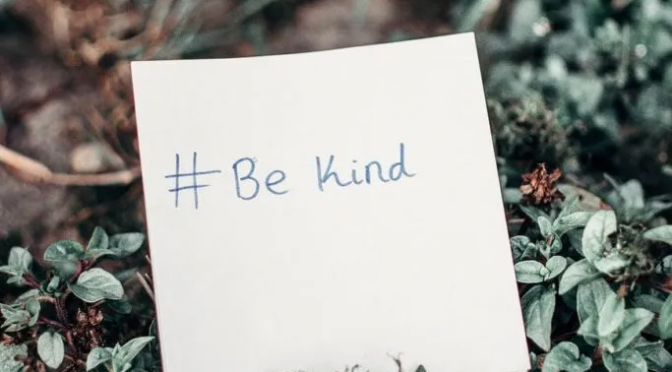
It seems like such an intuitive thing to do, yet we are very challenged in our ability to stay kind towards ourselves. This form of self compassion seems to fly in the face of the internal mantras we have of judgmental self-evaluation, as a means to keep ourselves “on course“. Basically, we like our whips. We like to use self-critical evaluation as a way to stay on track.
This does not always serve us, however. Being kind to ourself is a form of self compassion that uses our first language, behavior. You know…how babies talk…by crying in order to get the adults in their life to meet their needs. This language of behavior is still our first language as adults. If we do kind things for ourselves the message we send to us is that we are worthy. We are worthy of investing our time in. We are worthy of investing our energy in. We are worthy of investing our love in.
Take a look at Dr. Natalie‘s video message this week on how you can be kind to yourself.
Community is how we gain and sustain our strength to be the remarkable women that we already are in this world. Having a bad day…check in and get support. Killing it at life…jump on and inspire your friends. This online Facebook community is where we all gather to love and support one another on our prospective journeys to live our best lives!
It’s the fall and most of us in America have been conditioned to think of fall as football season. Both college and professional. And how many times have you heard or seen the idea of “a house divided“. This is a tongue and cheek way of talking about living in the same household and favoring different teams that are arch rivals. It’s fun and we see lots of memes about it. It can get dicey, but for the most part it is all fun.
But what if the division is inside yourself? What if there are parts of yourself that you desire to disavow? Do you have these aspects of yourself that you want to reject? Here is my question for you… How do you know that these are parts of yourself that should be rejected? Where did you learn that these aspects of yourself are not worthy? Could you unlearn this?
More than likely where you learned not to love this aspect of yourself was in the rules of social conditioning. Social conditioning is a powerful pull. It teaches us what we should and should not be. And I don’t mean to give this a totally bad rap. There are values to social conditioning, including that this keeps us on the straight and narrow, away from making bad choices that could be harmful to ourselves or others. This has value in some places in our life. However, it’s a runaway train. Social conditioning starts to make opinions about subtleties and aspects of our self that we cannot change. When this starts to happen, we start to be a self, divided.
We take the war from the outside and turn it inside. Our internal conflict with parts of ourselves that we do not like about us, creates a discomfort that we seek to numb or deny. One way or the other we are pushing against our own self. And when we are in conflict with our self, we start to be in conflict with our outer world as well.
Warning this is a part where you will hear some therapist speak that likely will irritate you. It’s the section of the blog where I say things that you know to be true, but hate when I’m right.
If you are noticing more irritability in your life or that you’re trying to numb away with over eating, drinking, overworking, or whatever your favorite numbing agent is, then it is likely that there is division within yourself. What you’re noticing on the outside is an effort to make this division either go away or to escape from this discomfort. Yet, the division really isn’t on the outside, it’s on the inside. What about this thing you’re pushing away from, this irritation, this aspect in your outer world that you do not like, has a parallel on the inside of yourself? Think about it.
Let me give you an example. Let’s say that you are in line at the grocery store and someone asks you if they can go ahead of you because they only have a few items and you have a full cart. Normally this is something you would offer to another person, however you hadn’t noticed this individual standing behind you. Now you’re irritated that they have the audacity to ask. Yet, you let them go ahead of you anyway. Now you’re irritated with this person. Irritated by their arrogance in asking, or at least that’s what you tell yourself.
You know what I’m going to say next. You aren’t irritated with this person at all. You are irritated with yourself. Maybe you’re irritated that you allow people to walk all over you. Maybe you’re irritated that this person has the capacity to ask for what they need, and you do not. Maybe you’re just irritated that you didn’t notice that they were there and weren’t able to offer before you were asked. Whatever you’re irritated with, you can bet that it’s a part of yourself that you don’t like. It’s an aspect of you that you’ve noticed in the past and you try to push away. It may even be an aspect of yourself that you don’t think is changeable. I assure you that is not the case. Anything inside of you is changeable. But maybe it doesn’t need changing. And that is where true irritation comes to play.
Why wouldn’t we change some thing about ourselves that’s irritating? I’ll tell you why…because it’s not a part of us that needs changing. It’s a part of us that needs acceptance. It’s a part of us that needs loving. It’s a part of us. And therefore it should not be something that we reject but some thing that we pull close. But what if these aspects of our self are in opposition to other aspects of our self? How do we accept those? This is the paradox. That two seemingly opposite things can be true at the same time, even when they are opposite things about ourselves. These can be excepted. These can coexist. And the way we facilitate peace about this is through loving all aspects of our self…the good, the not good, and everything in between.
And know, I have a monthly Master Class for FREE, in an intimate coffee and conversation setting. This is a great place to get some FREE Group Coaching from me, helping you be the best version of yourself all the time. Please be sure to sign up. Even if you can’t join every month, you will be part of the mailing list to hear about the topics and get the video highlights I send out afterwards, so it is well worth it.
Or, if you are looking for something a little more in depth, take a look at the Online Courses that I offer to help people with their personal growth and development.
Pandemics, social distance ending, returning to work, ending the school year, starting the summer…need I list more of the transitions we are all going through right now? We are exhausted and we have reason to be. Yet, there is a hidden exhaustion that comes from the borrowed trouble of worrying about things that haven even happened yet. Is this something you do? If so, take a listen to Dr. Natalie’s Vlog this week and hear her tips on how to address this.
Many of us aren’t even aware of what self compassion is. But we can guess it’s some of that hippie dippy mushy stuff that therapists talk about. Not so much. This strategy is much more strength based than you think and is as precious as Gold. Take a look at Dr. Natalie’s Vlog this week to learn more.
https://youtu.be/XUTll4sIvFM
You may want to head over to her blog this week as well, to learn even more on the skill of self-compassion.
The wound is the place where the light enters you.
Rumi
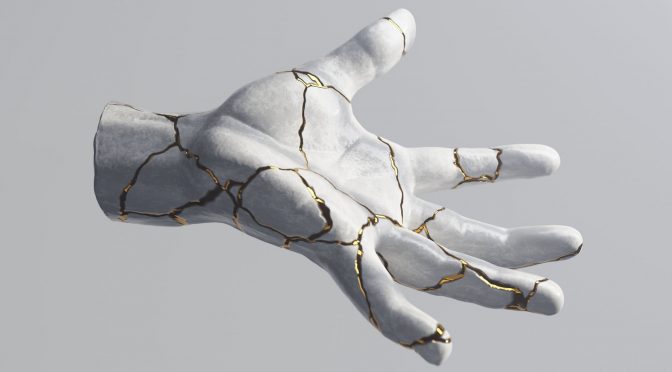
There is a tradition in Japanese culture, whereby broken pottery is reassembled using gold as the adherent in the cracks between broken pieces. The flaw thereby becomes a part of the beauty of the object as it ages. Its a part of the pottery’s history and by being treated with gold, shows that this part of the history has a high value.
It’s an interesting concept to think of our hardships and brokenness as the most valuable parts of us. So true though. What I really like about this Japanese tradition is that gold is used in the repairing. So, the beauty only “shines” when the repairs are done. I have been a psychologist over the course of two decades and I have helped others and watched as they have healed. The beauty that emerges is inspiring to me. And I mean inspiring.
I too have had my share of difficult times and one of the unique aspects of being with others during their healing journeys is that I am privy to the knowledge that this too shall pass and I could be all the better for that. I just have to let the pieces fall and then pick them up and mend them with the gold of self-compassion. This work can be tedious and many times pain staking. It’s still so worth the effort.
What is self-compassion you may ask? Well compassion’s literal translation is to “suffer with”. In action, compassion usually is a conscious awareness of another’s suffering, paired with a desire to try to share the pain with this individual in an effort to alleviate it. To have this same empathic quality towards oneself, is to see yourself through the lens of loving kindness with the knowledge that the human condition is flawed and your mistakes are an aspect of that humanity. To love yourself despite your faults. To see with this lens does not negate that negative things have occurred, the wounds have left scars, or that healing has come at a cost. Instead it allows us to see the beauty in these scars. The mending of the old wounds has left us with a different kind of beauty. The process of self-compassion and compassion towards others lets us see the beauty in our own collective human condition, flaws and all.
Investing in ourselves is the most important work we will ever do, because without that investment there isn’t much in us to be shared with the world, no matter how much we want to. My challenge to you is to notice where your broken pieces are and take time to carefully pick them up so that you too can start your repair work. Take this loving approach of seeing the beauty in the places where you feel broken and adding the gold of self-compassion to adhere these broken pieces into the whole of you. Let the flaws of your life shine through and tell us of your real beauty.