
Tag Archives: Learn to Love Your Story

Love Your Struggle

This being human is a guest house. Every morning is a new arrival. A joy, a depression, a meanness, some momentary awareness comes as an unexpected visitor…Welcome and entertain them all. Treat each guest honorably. The dark thought, the shame, the malice, meet them at the door laughing and invite them in. Be grateful for whoever comes, because each has been sent as a guide from beyond.

Rumi

One of our biggest struggles in life is that we have been taught that struggle is a bad thing. That it is something to be avoided. And it doesn’t help that are own biology illudes us into thinking this could be true, because it is uncomfortable to be in struggle. The truth is it is uncomfortable when we grow, change, or learn new things. It disrupts the homeostasis, so of course our bodies and minds will fidget while it occurs. But struggle is the gift…not the enemy. The enemy is the idea we have been sold that we should not struggle.

All things in life can be our teacher. All feelings, thoughts, and circumstances give us another opportunity to be a better human. And what this really means is that all variations of struggle are an opportunity for our growth. We don’t always see it that way. And we have certainly not been equipped to by conventional wisdom. I think that it is important to remember and address where this convention is coming from. Who is making up the rule that struggle is a bad thing, a thing to be avoided? Who’s message is this? Because it most certainly is not a message that is helping us to grow.

watering process of thin green sprout
Photo by Karolina Grabowska on Pexels.com

I believe that one of the strongest drivers of avoiding struggle is our American economy. In a market driven largely by enticing you to buy what you don’t necessarily need, but do want, there are large scale strategies at making this “want” seem the most desirable. There is even a bit of blurring in the lines between what is needed and what is wanted. Am I right? To pick on myself a minute, let’s talk about aging skin. The premise of most skin care products is that there is an ideal beauty. This beauty has a short natural window of time in our youth. The rest of the time we spend countless hours and money trying to replicate this ideal. I can’t tell you the amount of time and money I have spent trying to get that look back from my youth. But I have to ask, if I was inviting the “guest” of aged skin into my house and accepting what it had come to teach me, would I be so ready to through money at trying to stave this process off?

The key is treating our negative experiences, feelings, or thoughts “honorably”, as Rumi indicates. Giving these messengers grace and compassion, rather than labeling them as bad and resisting them. Make these parts of yourself “guest”s in your life. Let these parts of you know they are welcome. That their messages are important. And in time, as your grace and compassion softens you, give these “guest”s your attention and time, so as to learn what they have come to teach you. Accepting their gifts, instead of resisting them.

All parts of us are valuable. Even the things we don’t like very much or that make us uncomfortable. All of our experiences, even our struggles, deserve to be heard and seen and known. Love all of yourself, all events in your life, not just the things that are easy to love.

This is our life’s work. This is our sacred journey as humans.

Why wouldn’t we change some thing about ourselves that’s irritating? I’ll tell you why…because it’s not a part of us that needs changing. It’s a part of us that needs acceptance. It’s a part of us that needs loving. It’s a part of us. And therefore it should not be something that we reject but some thing that we pull close. But what if these aspects of our self are in opposition to other aspects of our self? How do we accept those? This is the paradox. That two seemingly opposite things can be true at the same time, even when they are opposite things about ourselves. These can be excepted. These can coexist. And the way we facilitate peace about this is through loving all aspects of our self…the good, the not good, and everything in between.


Come to our monthly Master Class for FREE, in an intimate coffee and conversation setting. This is a great place to get some FREE Group Coaching from Dr. Natalie, helping you be the best version of yourself all the time. Please be sure to sign up. Even if you can’t join every month, you will be part of the mailing list to hear about the topics and get the video highlights sent out afterwards, so it is well worth it.

Or, if you are looking for something a little more in depth, take a look at the Online Courses to help your with your personal growth and development.
It’s Good to Remember We Are Only Human

We tend to be so difficult on ourselves. Like I talked about last week, we are always looking to use our whips on ourselves as a means to correct our behaviors, as if this actually works as our best tool. Let me break some news to you…punishing ourselves IS NOT our best tool for changing behavior. In many ways, it is the least helpful. What happens when we are punished (even by ourselves) is we learn to avoid the punishment…not how to do the thing better that we messed up that resulted in our punishing ourselves.

I try to help break down in this video a skill I have used for years, based in Person Centered Theory. Its a basic set of questions that help you look at what you and/or others are doing, through a much different lens. Instead of whipping yourself for what you are doing wrong, it is looking at what you are doing more holistically. Getting ideas for what is going well, as much as what is not. Take a look.

https://youtu.be/762j3oITBRE

Here are those basic questions again:

  1. What is working?
  2. What isn’t working?
  3. What to keep the same?
  4. What to do differently?

My example here is how to do this in parenting, but these questions can work in any area of your life. Try them…and tell me about it by replying below in the comments. I’d love to hear your thoughts on how these work for you.


And know, I have a monthly Master Class for FREE, in an intimate coffee and conversation setting. This is a great place to get some FREE Group Coaching from me, helping you be the best version of yourself all the time. Please be sure to sign up. Even if you can’t join every month, you will be part of the mailing list to hear about the topics and get the video highlights I send out afterwards, so it is well worth it.

Or, if you are looking for something a little more in depth, take a look at the Online Courses that I offer to help people with their personal growth and development.

How to Be Kind to Yourself

It seems like such an intuitive thing to do, yet we are very challenged in our ability to stay kind towards ourselves. This form of self compassion seems to fly in the face of the internal mantras we have of judgmental self-evaluation, as a means to keep ourselves “on course“. Basically, we like our whips. We like to use self-critical evaluation as a way to stay on track.

This does not always serve us, however. Being kind to ourself is a form of self compassion that uses our first language, behavior. You know…how babies talk…by crying in order to get the adults in their life to meet their needs. This language of behavior is still our first language as adults. If we do kind things for ourselves the message we send to us is that we are worthy. We are worthy of investing our time in. We are worthy of investing our energy in. We are worthy of investing our love in.

Take a look at Dr. Natalie‘s video message this week on how you can be kind to yourself.

https://youtu.be/qVvzqrDKSOk

A Case of the Mondays…

Have you ever had one of those Mondays…or just one of those days in general, when you feel like the universe is imploding on you? Like dominoes, one bad thing happening after another. This is not an accident. And not for the reason you think.

Confirmation bias is how our brain tries its best to make things easier on us, by limiting what it is paying attention to. I mean really…if you were paying attention to all of what you are perceiving at any given moment, you wouldn’t get out the door. All the smells, sounds, and sights in just the space your in right now are enough to keep you occupied for a few minutes…right.

So the brain uses this confirmation bias thing to help you only pay attention to the things that it thinks will benefit you the most at any given time. Now, if you are in a bad mood, guess what those things are? You guessed it…its only looking for the next bad thing to happen and what it expects to see it will start to find my friends. You will always find things to be upset with if that is what you are looking for.

Here is a tip on how to deal with a case of the Mondays…Dr. Natalie breaks down in this vlog a strategy for managing through this.

A Tip For Using Today’s Strength for Today’s Problems

The key is this: meet today’s problems with today’s strength. Don’t start tackling tomorrow’s problems until tomorrow. You don’t have tomorrow’s strength yet. You simply have enough for today.

Max Lucado

Stay in the present. With all its gifts, joys, burdens, and struggles. We get ahead of ourselves all too often. We think that worry is actually problem solving. As if running all the worst case scenarios in our head is giving us the edge. Is strengthening our resolve. Is sharpening our sword.

In fact it is doing quite the opposite. You see, our brain is not always the brightest bulb. The mind is a tool, remember, and should not be the master. No, the brain thinks if you’re thinking something than it is actually happening. In fact, studies show that when scanning the brain during an activity AND when scanning the brain while imagining that same activity, the very same neural pathways are firing. Basically, our brains don’t perceive a difference between reality and imagination.

Spend 30 minutes agonizing about how to make a phone call to your family member about some help you desperately need and don’t want to ask for, only to spend 4 minutes on the phone with them. And don’t forget the 20 minute recap on feeling self pity that you’re in a position that you needed to ask them for help at all. Well folks, I’m sorry to tell you but the pain of 4 minutes turned into the suffering of 54.

And that’s just it. When we play things out in our mind, our body and soul is experiencing it as if it is real. No wonder we are so exhausted all the time, with all the running around, second guessing and Monday morning quarterbacking we do.

So why not use what we know the brain will inevitably do to our advantage. Why not practice in our mind being here in just this moment…enjoying it when it’s desirable, spending time feeling grateful, and tolerating the pain of what is right in front of us, but not adding to it with our preemptive worries or ruminative replays of events. When we practice being here in just this moment, we add in more of the things that lift us up and use the resources we know we have at this very moment and are confident in. No more and no less.

Therapists call living in this way, Mindfulness. It is a matter of nonjudgmentally being in the present moment and only managing what we need to in the now. Not worrying about our pasts or our futures. When we have a hard day, this is really tough. It can be easy to start stacking our problems together, comparing them to other times we have experienced these things, and worrying that this will just keep happening. Being Mindful is a way to practice self-compassion. To be kind to ourselves by only expecting that we can handle the problem of the present moment with the skills and resources we have in any given present moment.

Here is a tip. Take a breath when hard things start happening and try saying something like this to yourself, “I only have to manage what is happening in just this moment and I am doing the best I can with what I have. I will handle just this moment and when the next thing comes, I will leave that to the strength and knowledge I will have in that next moment and only manage what is in front of me for now.”

Take the advice in this quote and try this tip. Be in the moment and solve today’s needs with today’s strengths and leave Tomorrowland to Disney.

Why Practicing Self Compassion is Gold

Many of us aren’t even aware of what self compassion is. But we can guess it’s some of that hippie dippy mushy stuff that therapists talk about. Not so much. This strategy is much more strength based than you think and is as precious as Gold. Take a look at Dr. Natalie’s Vlog this week to learn more.

https://youtu.be/XUTll4sIvFM

You may want to head over to her blog this week as well, to learn even more on the skill of self-compassion.

Finding Beauty in the Broken

The wound is the place where the light enters you.

Rumi

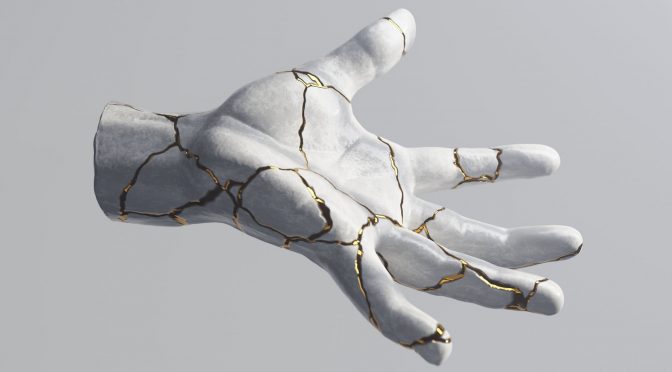
There is a tradition in Japanese culture, whereby broken pottery is reassembled using gold as the adherent in the cracks between broken pieces. The flaw thereby becomes a part of the beauty of the object as it ages. Its a part of the pottery’s history and by being treated with gold, shows that this part of the history has a high value.

It’s an interesting concept to think of our hardships and brokenness as the most valuable parts of us. So true though. What I really like about this Japanese tradition is that gold is used in the repairing. So, the beauty only “shines” when the repairs are done. I have been a psychologist over the course of two decades and I have helped others and watched as they have healed. The beauty that emerges is inspiring to me. And I mean inspiring.

calm young woman looking at camera through broken window
Photo by Hebert Santos on Pexels.com

I too have had my share of difficult times and one of the unique aspects of being with others during their healing journeys is that I am privy to the knowledge that this too shall pass and I could be all the better for that. I just have to let the pieces fall and then pick them up and mend them with the gold of self-compassion. This work can be tedious and many times pain staking. It’s still so worth the effort.

What is self-compassion you may ask? Well compassion’s literal translation is to “suffer with”. In action, compassion usually is a conscious awareness of another’s suffering, paired with a desire to try to share the pain with this individual in an effort to alleviate it. To have this same empathic quality towards oneself, is to see yourself through the lens of loving kindness with the knowledge that the human condition is flawed and your mistakes are an aspect of that humanity. To love yourself despite your faults. To see with this lens does not negate that negative things have occurred, the wounds have left scars, or that healing has come at a cost. Instead it allows us to see the beauty in these scars. The mending of the old wounds has left us with a different kind of beauty. The process of self-compassion and compassion towards others lets us see the beauty in our own collective human condition, flaws and all.

macro shot of heart shaped cut out
Photo by Engin Akyurt on Pexels.com

Investing in ourselves is the most important work we will ever do, because without that investment there isn’t much in us to be shared with the world, no matter how much we want to. My challenge to you is to notice where your broken pieces are and take time to carefully pick them up so that you too can start your repair work. Take this loving approach of seeing the beauty in the places where you feel broken and adding the gold of self-compassion to adhere these broken pieces into the whole of you. Let the flaws of your life shine through and tell us of your real beauty.

Shifting Perspectives

Imagine you are walking in the woods and you see a small dog sitting by a tree. As you approach it, it suddenly lunges at you, teeth bared. You are frightened and angry. But then you notice that one of it’s legs is caught in a trap. Immediately your mood shifts from anger to concern: You see that the dog’s aggression is coming from a place of vulnerability and pain. This applies to all of us. When we behave in hurtful ways, it is because we are caught in some kind of trap. The more we look through the eyes of wisdom at ourselves and one another, the more we cultivate a compassionate heart.

Tara Brach

So much of the time we are acting from our own pain in response to someone else’s pain. What if we could remember this better in the moment? What if we had better control of our emotional state in the moment? What if we could really see and hear where someone else is coming from?

I think this could change the world. It would start first by changing the story we tell ourselves. It’s a powerful thing, those stories. They shape us. They take the same set of circumstances and shine them in totally different lights.

close up photo of dog
Photo by Alexander Kovalev on Pexels.com

In this quote, Tara Brach is illustrating this principle for us. One story is that this animal is ready to bring intentional harm to us. The alternate story is this animal is very hurt and therefore very vulnerable and ready to defend itself. So interesting that something that “looks” the same can have such a different meaning based on the story we tell ourselves about it.

There is another aspect to this as well. The stories we tell ourselves over and over, become ingrained in us at a level in which we are unaware. We have automatic responses to people, places and things, because somewhere in our history we created a story about the meaning of these things and now we accept it as fact…without question.

open book pages on surface
Photo by Pixabay on Pexels.com

But what if the story is wrong? And yet we are still going about unaware that we have this unquestioned idea in our mind and think it is a fact. Thoughts and feelings are not facts. They are messages. They are information telling us about what is happening in that moment. And if we accept them as fact without question…well, we may find ourselves a far distance from the truth without ever intending it.

These are the very concepts that are manipulated in marketing. We are told over and over what beautiful is and is not. What successful is and is not. What we “need” and what we do not “need”. Over time we start to distrust our own guts on these things, and fall into the trap of the status quo telling us what our lives should be. And furthermore, feeling disappointed when we are not able to attain these things. Believing our very human existence, as it is, has somehow missed the mark.

open book pages on surface
Photo by Pixabay on Pexels.com

I can’t tell you the number of times I have run into this with folks I work with. People come in looking to treat their anxiety and depression and don’t even realize that the stories that they are telling themselves are having a negative impact on them. Many times they don’t even notice that they tell themselves these stories, or that they accept them as facts without question. They have learned not to trust their own judgment on things. They have been taught that the definitions of how to live their lives are somehow outside them, generated by outside forces, and they feel they have no ability to change these circumstances.

What stories are we telling ourselves that may be harmful? What can we do to change these stories? So much of what I do with people in these situations is to help them unlearn things. To help them discover what they stories are underneath the surface, how those stories got there, and how they can help themselves re-author those stories. I would love to help you with this too. Click below for a few gifts to get started on this.

Your Observer Self is The Best Author For Your Life

The mind is a wonderful servant but a terrible master.

Buddhist Proverb

Mindfulness gets talked about a lot as a useful tool for clearing the mind and being in the present moment. These are true statements. It also is the gateway to our observer self. The knowing. The soul. The true self and not the ego. People call it by many names.

What this aspect of our being does is allows us space to see our thoughts, behaviors, emotions, and experiences for what they are…separate from us. Dr. Natalie Marr takes us on a winter stroll as she also explains how this vantage point allows us to be the authors in our own stories, so we can Love Our Stories as they are…as our observer selves see them.

My example here is how to do this in parenting, but these questions can work in any area of your life. Try them…and tell me about it by replying below in the comments. I’d love to hear your thoughts on how these work for you.


And know, I have a monthly Master Class for FREE, in an intimate coffee and conversation setting. This is a great place to get some FREE Group Coaching from me, helping you be the best version of yourself all the time. Please be sure to sign up. Even if you can’t join every month, you will be part of the mailing list to hear about the topics and get the video highlights I send out afterwards, so it is well worth it.

Or, if you are looking for something a little more in depth, take a look at the Online Courses that I offer to help people with their personal growth and development.

Take Care of the Only “You” You’ve Got!

Dr. Natalie Marr takes her readership on an afternoon winter stroll, while talking about the stress response system and how neglecting/avoiding feeling your emotions or intentionally stuffing emotions can negatively affect you across time.

She suggests that we feel our feelings as they happen, completing the stress cycle. During this clip she refers to the book BURNOUT: THE SECRET TO UNLOCKING THE STRESS CYCLE, By Emily Nagoski, PhD and Amelia Nagoski, DMA (2019). Dr. Marr receives no proceeds in the promotion or discussion of this book. But she does highly recommend it.

Don’t Forget to Love the One That is With You For Life…You!

Self-care is giving the world the best of you, instead of what’s left of you.

Katie Reed

Are you tired of being tired? I know I am. And its not like I don’t know better…its just so darn easy to fall into the same patterns over and over. So many things to do. It can be overwhelming. Day after day of getting up, getting ready, doing the thing we do, coming home (or starting our “home” life for the COVID day), taking care of the ones we love, probably going back to some work on that thing that we do, then finally crashing, only to have to wake up and start it all over again. Enough!!! Am I right?

expressive woman crying in dar room touching head
Photo by Skylar Kang on Pexels.com

Notice a key ingredient missing in this? Self-care!!! When are we taking care of us? And don’t give me that old line of, “I don’t have time.” Of course we all feel like we don’t have time when we are running in circles and neglecting ourselves, which leads to not resting well, which leads to running into the ground and completely losing sight of why we are doing what we are doing in the first place.

I’m pretty sure no one said, “When I grow up I want to work so I can pay my bills.” No…we wanted to grow up to have fun, hang out with friends, start families, and fulfill our hopes and dreams. So what are those hopes and dreams? And how far off is your routine from helping you to accomplish them? For most of us, it’s way too far off. And what happens from that point is usually no good.

When we aren’t where we are “supposed to be” according to our families, cultures, or personal ideals, we start to judge ourselves more and more harshly. This leads to less likelihood that we are caring for ourselves. In fact, we usually just pile on the self-judgment and I think that this pattern is what causes us the most difficulty. We are already far from where we want to be, and then we ladle on being judgmental with ourselves for being there and that makes us not want to be present in our lives even more.

ethnic woman frowning face and pointing at camera
Photo by Alex Green on Pexels.com

This is not good people. Not good at all. I wrote a piece a while back talking about how some of us will even begin to experience having difficulty wanting to be in the present at all. Check it out.

I want to suggest an alternative to this. I want to help people start to learn not just how to get out of this rut, but to learn the skills for noticing when they start to fall into this rut and why. I want to assist people to have the skills not only to recognize what’s happening, but also change its course. And honestly, my dream is to help people see how much there is to love about themselves right now. That they already are people worthy of love and belonging. That they don’t have to achieve some big goal, where the right thing, buy to right product, have the right job, etc. to be worth their own focus, love, and self-care.

Take a look at this video and learn some more about my online Personal Development Program. This is what I’m doing to help others with these issues. And I recently added Group Coaching with Community Support packages as well. Take a look at the packages after watching the video.

https://youtu.be/OH7fOhJar8w

If any of this seems like a good idea for you, join our mailing list and receive a free gift. Once on our mailing list you will never miss any new information on the program. Or you can just head right Courses page by clicking this link.

Where Do We Even Start?

But change is easier said than done. It’s almost impossible to notice those aspects of ourselves that cause problems relating to others, or that keep us from reaching our full potential, if we can’t see ourselves clearly.

Kristin Neff

We start where we are of course. And sometimes we don’t know where we are…so this can make starting difficult. So what to do with that 🤷🏻‍♀️?

The first month in the online Learn to Love Your Story Personal Development Course addresses just this issue. How do you begin where you are, when indeed you’re not quite sure where you are even?

Well…the answer is in building our self-awareness. These skills are undervalued and nearly un-taught these days. And any therapist or counselor will tell you that self-awareness is pivotal in wellness work.

Why? Well you can’t change what you don’t know! And long before that, you can’t know you want to change if you’re not first self-aware.

Seems simple I know, but believe me…a month is just scratching the surface in building this skill set. It most definitely is the foundation for the Personal Development Course, and a skill that will benefit you in life regardless.

If you haven’t read my blog introducing the Learn to Love Your Story Personal Development Course, do so now. There is a short video on the course and also a link to get some free gifts. If you’d like to register for the course, click here and we can get you started.